
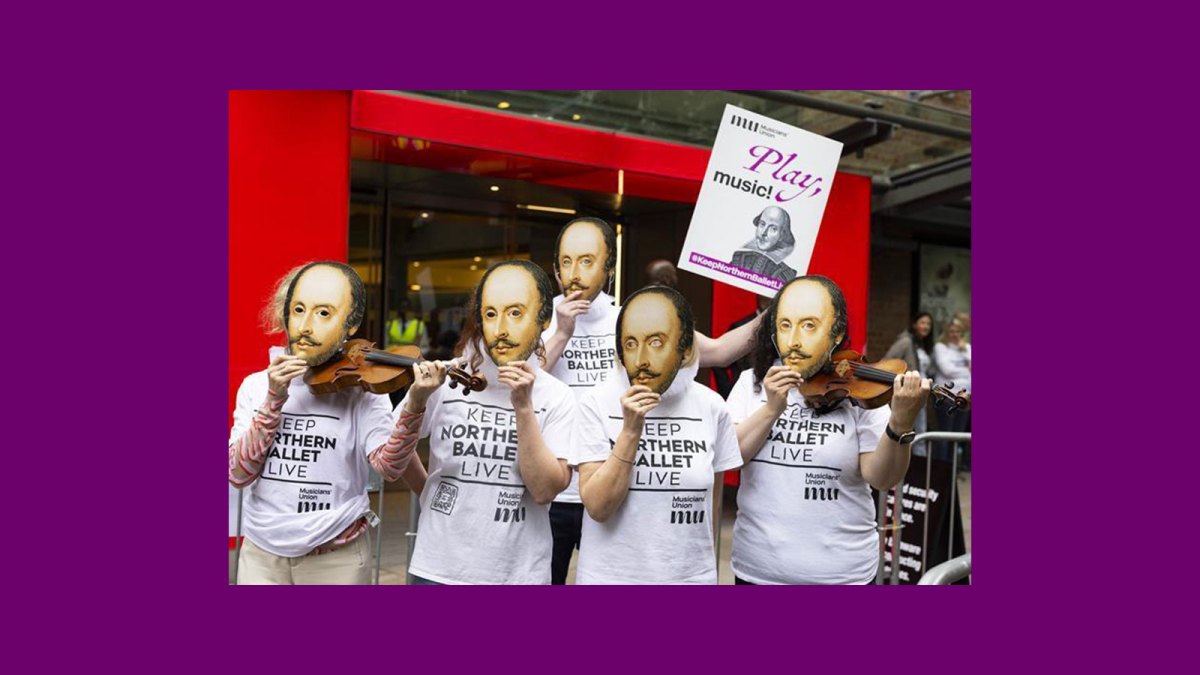
The UK-based Musicians’ Union has 36,000 members, and covers musicians across a huge variety of genres, vocations and working patterns. Its orchestral section—about 10% of the membership—represents the best organized part of the union. (Salaried orchestras like the Hallé or the Liverpool Philharmonic—with playing roles and organizational structures that have rarely changed in decades—are extremely amenable to union organizing.) Union coverage of orchestral players is extremely high compared to the rest of the UK workforce. In 2023, 22.4% of UK employees were part of a trade union, whereas in salaried UK orchestras, MU coverage rises to over 80%. Though the rate of coverage drops to around 60% for the UK’s freelance orchestras, for young music graduates, to join the MU still feels like a rite of passage.
In February 2024, a rare thing happened: the MU announced a full strike, over the ongoing situation at ENO. In the end, the strike didn’t happen; the musicians were eventually offered seven months of guaranteed work in place of their old contracts, a deal which MU members accepted “with heavy hearts,” as all future industrial action was called off. A year on, it’s now 45 years since the Musicians’ Union has been on full strike.
For the past two and a half years, I have reported on various aspects of the UK classical music labor market for VAN. It’s been a pretty grim beat, but in that time, one question has bugged me time and again: For a part of the market which is exceptionally unionized, why is life for orchestral musicians—especially freelancers—being allowed to get so much worse?
At the start of March, I sat down with Naomi Pohl, the general secretary of the Musicians’ Union, in their offices near London Bridge, to talk about a challenging time for the sector.
Unlimited access to our
