

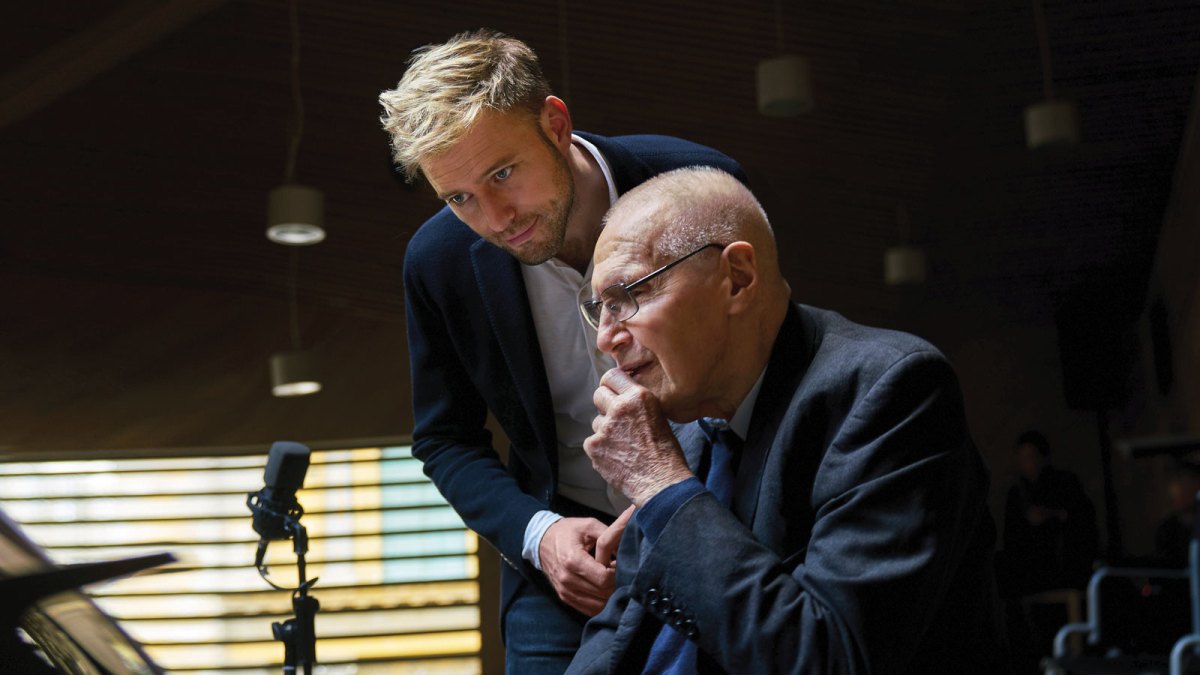
Alongside the regular recital appearances and branching out into conducting, in the six months between December just passed and May this year, the baritone Benjamin Appl will have released three albums: one, out in February, of Kurtág songs intermingled with Schubert lieder, featuring a rare appearance of the composer at the piano for Schubert’s “Der Jüngling An Der Quille” and Brahms’s “Sonntag”; a second, a journey in song through the life and times of his mentor and teacher, Dieter Fischer-Dieskau; and the third, a Christmas album, in which he returned to his hometown of Regensburg for performances with the Domspatzen, where he was once a boy chorister. It’s not like Appl flits between these myriad projects; you sense a real deep commitment to the bit in his work. (The best example of this is his “Winterreise” with pianist James Baillieu, filmed for the BBC by John Bridcut, and performed both inside the mountaintop Julier Tower in Switzerland—over 2,000 meters above sea level—and outside it, at times knee-deep in snow.) But, even compared to the hyperactive standards of most performers, Appl commands the sort of schedule that makes you go, eh?
On a short Zoom call earlier this week, Appl and I spoke about a range of subjects: music as memorial, grieving through repetition, distancing yourself from your heroes, the time a blind passenger in his car informed him (correctly) that he was speeding, and, initially, spreadsheets.
Unlimited access to our
