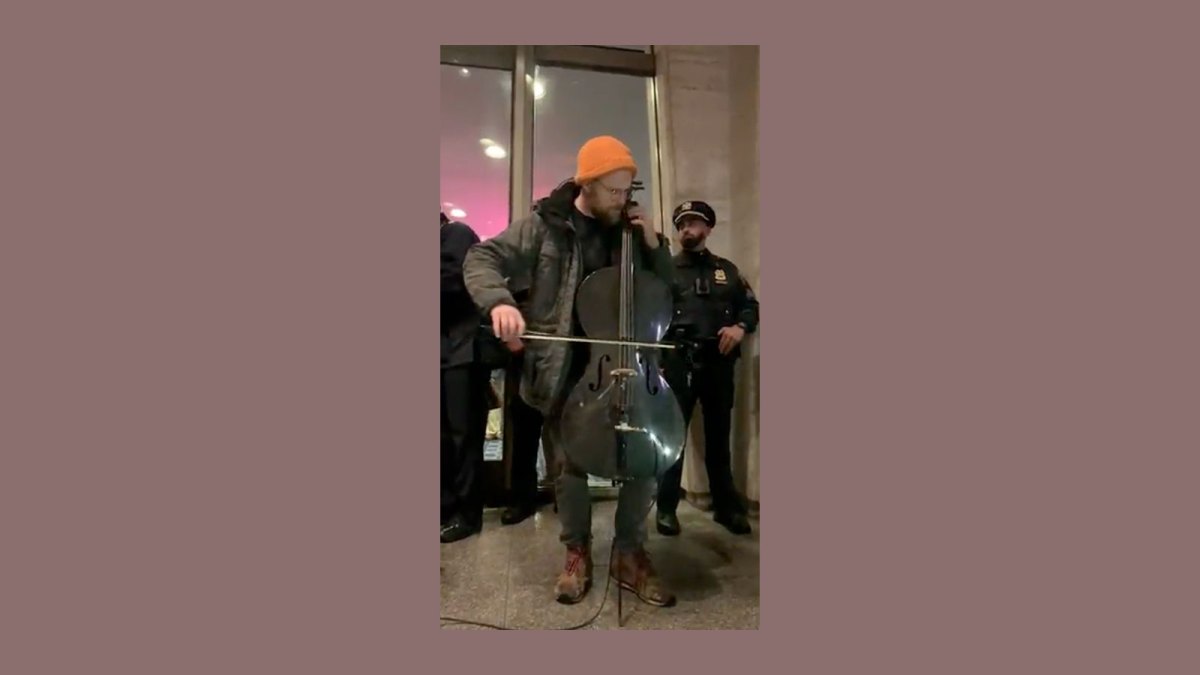
On Saturday, January 6, a group of activists taking part in the global Shut It Down for Palestine movement marched through a wintery mix of sleet and rain from midtown Manhattan’s Bryant Park to Lincoln Center, blocking the main entrance to David Geffen Hall just as concertgoers began to arrive for that evening’s performance by the New York Philharmonic. The largest banners called for a halt of American funding (both foreign aid and private donations) to the Israeli military. As audiences piled in through the hall’s side entrance, many made their way over to the front doors—from the other side—to watch the demonstration.
This hasn’t been the first time that pro-Palestinian movements have taken over Lincoln Center in recent months. On the eve of the 35th annual World AIDS Day, members of AIDS Coalition to Unleash Power (ACT UP) and Jewish Voice for Peace joined forces for a joint protest on the plaza’s steps calling for the U.S. to “Fund healthcare, not warfare.” Shortly before Christmas, a group of autonomous protesters, joined by the Rude Mechanical Orchestra, led a demonstration that (among other things) called out many of the namesake donors of Lincoln Center’s institutions—including David Geffen—for also having financial ties to the current war in Gaza.
Video footage from that second demonstration shows Lincoln Center security guards and NYPD officers using violence and force against the demonstrators. It made a striking contrast against one of the videos from last weekend’s protest, which featured activist, cellist, and writer Ethan Philbrick playing “Mawtini” (a song regarded as the unofficial anthem of Palestine as well as the larger Arab diaspora). As Philbrick played the elegiac tune about a homeland under siege, a handful of security guards and police watched on without interfering. I asked Philbrick about this moment two days later, in a conversation that also spanned the increasing frequency of performance-disruptive protests, and the challenges that many classical musicians face in taking direct action. As we spoke, another pro-Palestinian protest in New York was simultaneously blocking access to the Holland Tunnel along with the Brooklyn, Manhattan, and Williamsburg Bridges.
Messing with the Fantasy
An interview with cellist Ethan Philbrick, who played at last week’s Shut It Down for Palestine demonstration at David Geffen Hall