
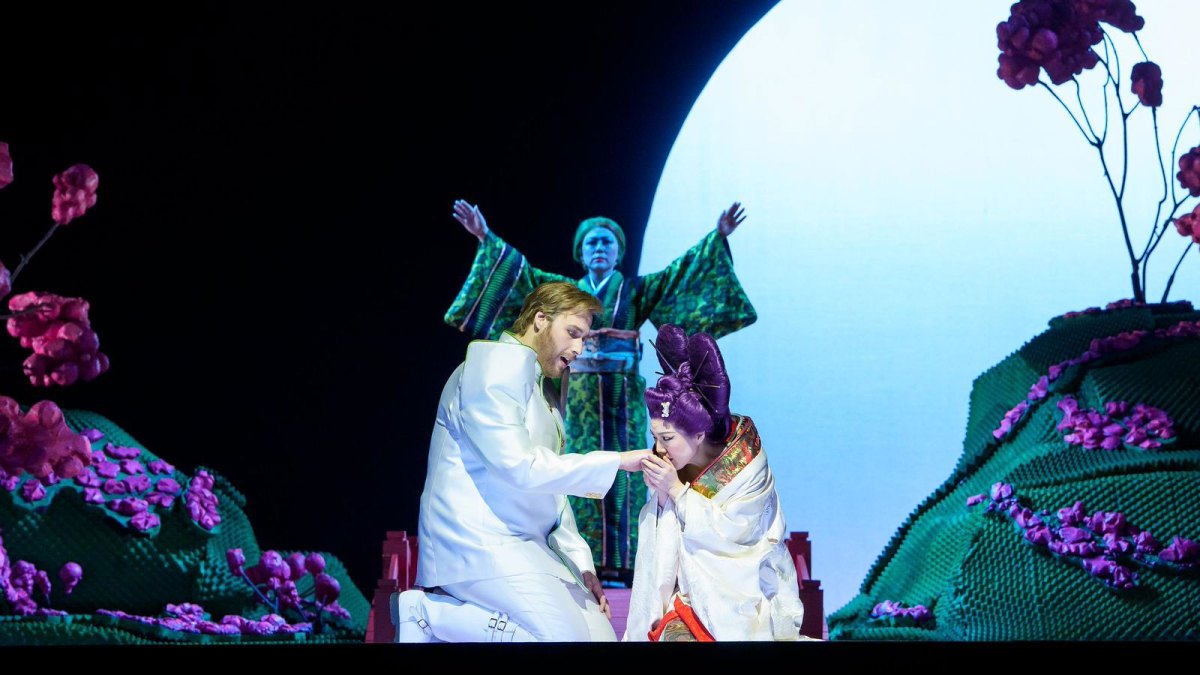
Her voice precedes her; this, at least, is no surprise. It is among opera’s oldest tricks, for an onstage character to “overhear” the future object of their desire in advance of both their own and the audience’s sight; falling in love on voice alone is, after all, the very premise of the genre. In “Salome,” to pick but one example, it is the sheer commandment of Jochanaan’s disembodied prophecies uttered in the offstage dark which compels the Princess to drag him out into the light: He must be brought to sight precisely because his voice—going on as if unaware of its circulation in the libidinal economy of an opera—is, by its lonesome, so arresting. Or else Manrico in “Il trovatore,” who, before he is made visible, is first overheard by Count and audience in the midst of his “Deserto sulla terra,” his serenade to Leonora (who has already spent much of the scene effusing about his voice and the desire to sight that it engenders). The gesture and its frequency are canny, as if opera, anxious for adequate reception, had embedded a manual of sorts for its own ideal apprehension. Be like the lover, such moments seem to implore: opera’s voices should make you, too, desire its beholding.
Unlimited access to our
