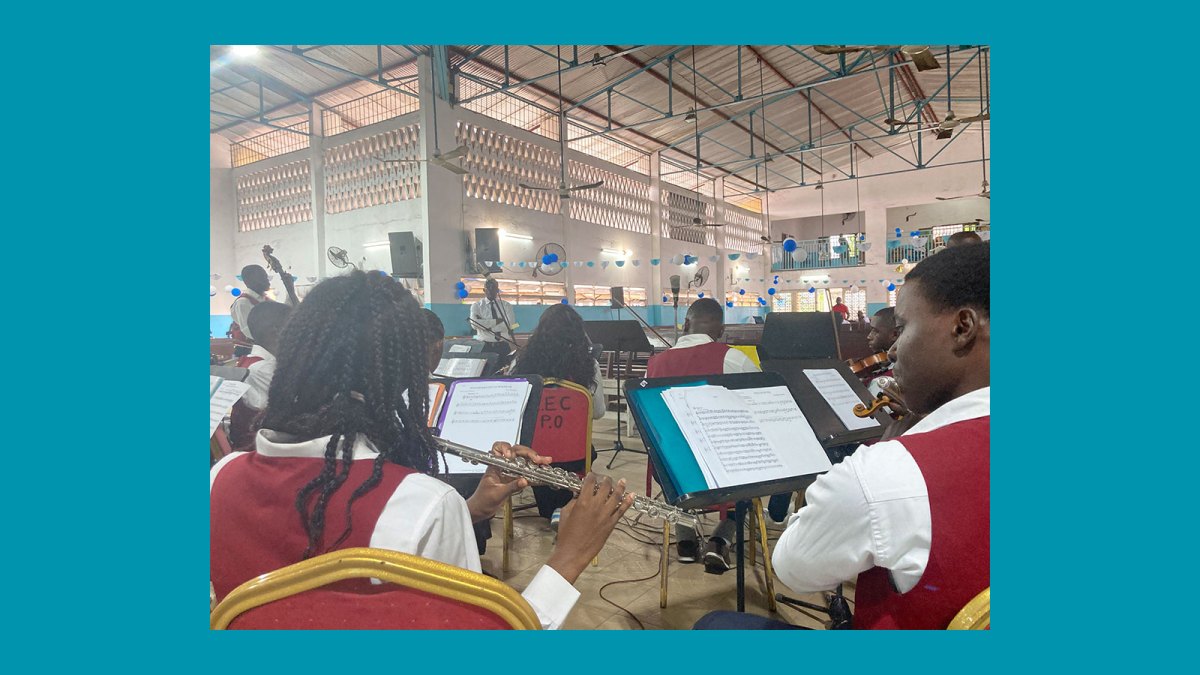
Western classical music is often thought of as placeless: a grammar of sound that belongs everywhere and nowhere, drifting free of soil, climate, history, on some variation of Henry Russell Cleveland’s axiom from 1835, that “Music begins where language ends.” There is, we tell ourselves, a Schumann for all seasons. Africa, by contrast, is so often burdened with place—with heat, rhythm, drum, dance—that the meeting of the two is treated as an oddity, a contradiction, a curiosity to be explained away. Of course, if one believes the first instance, the second is a pretense. What surprises the outside observer is not that African children might take up cellos or clarinets, but that we ever believed such instruments were not already theirs.