
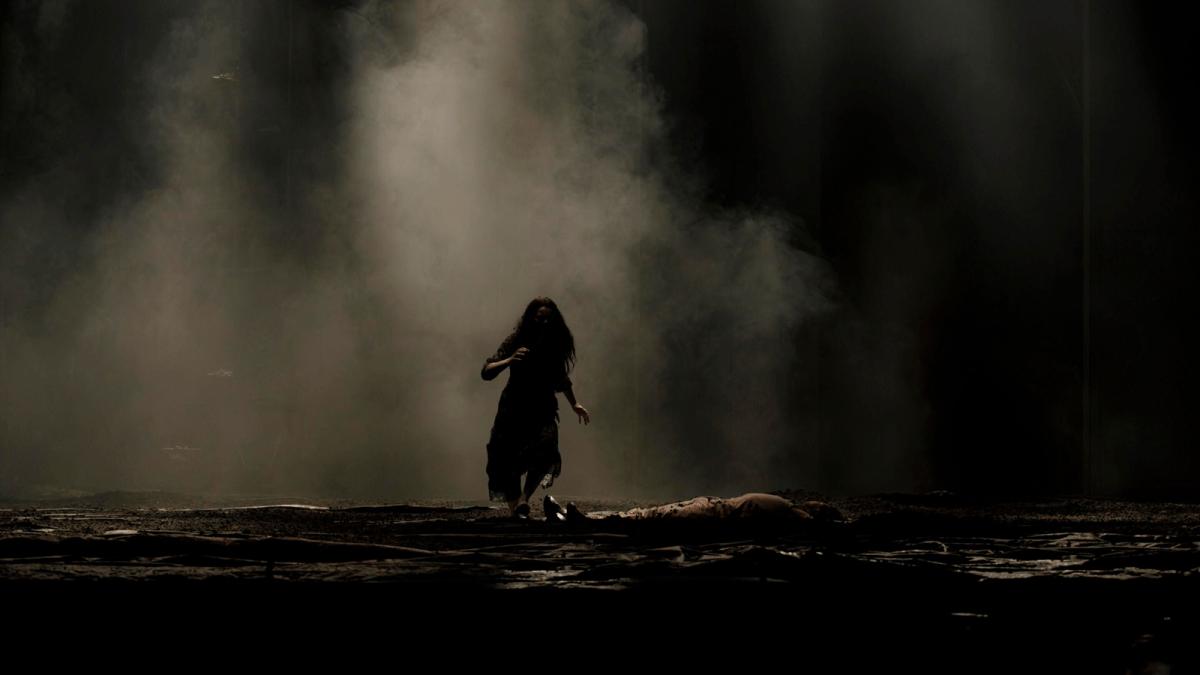
Earlier this month, audiences at Osterfestspiele Salzburg (Salzburg Easter Festival) stepped into a world of shadows and smoke. Simon McBurney’s stark new production of Mussorgsky’s “Khovanshchina”—co-produced with the Metropolitan Opera and conducted by Esa-Pekka Salonen—anchored the final installment of the festival’s three-year experiment without a resident orchestra. Onstage, religious and political factions battled for Russia’s soul in a murky, tragic swirl. In the pit, the Finnish Radio Symphony Orchestra rendered the opera’s jagged poetry with gleaming control and steely precision. It was cerebral and brutal. Like Mussorgsky’s unfinished score, worked over by later composers like Rimsky-Korsakov and Shostakovich (including, for this performing version, new additions by Gerard McBurney, the director’s brother), it was easier to admire than to love outright. At a blue-chip event notorious for its steep ticket prices, this “Khovanshchina” was no simple divertissement offered to its well-heeled audience like a praline on a silver platter. This was a challenging piece and a grim production to be reckoned with, both on their own aesthetic terms and in light of the devastating war in Ukraine—separated from Austria by two borders—and which, despite the announcement of an Easter truce, was still raging at the very hour of the performance. Mussorgsky’s “national music drama” about the 1682 Moscow Uprising took on fresh urgency in light of the current carnage in the east. Judging by the number of empty seats after intermission, some festivalgoers did not approve of such provocations. But this year’s festival seemed resolved not to play it safe.
Unlimited access to our
