

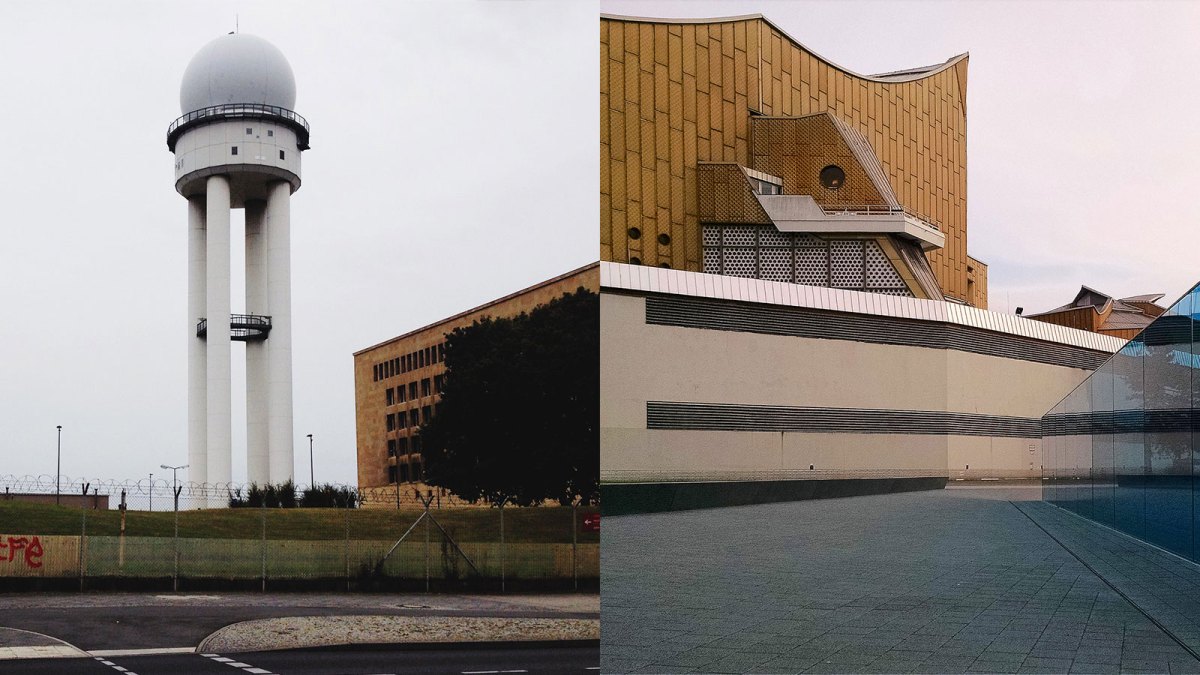
In 2032, the Philharmonie, the home of the Berlin Philharmonic, will close for major renovations—the year of the orchestra’s 150th anniversary. The project raises thorny questions: Where will the Berlin Philharmonic play in the interim? Given broad cuts to the city’s culture budget, how much will the renovations cost? How long will they take?
A feasibility study commissioned by the Berlin Philharmonic Foundation and obtained exclusively by VAN provides some insight. It estimates the total cost of renovating the Philharmonie at roughly €799 million: €436 million for the main hall, €307 million for the chamber music hall, and €56 million for a new extension on the parking lot in front of the hall.
ADVERTISEMENT

Rejecting several other locations, the study recommends the Philharmonic move to Tempelhof Airport while renovations are in progress. Tempelhof was a Nazi-era prestige project that became a U.S. Air Force Base, then a civilian airport, and now frequently hosts cultural events, including opera and musical performances by the Komische Oper. The venue will get two new concert halls, one large one with 2000 seats and a chamber music hall with 1000 seats. The study estimates that this move will cost an additional €353 million, including adaptations to turn the hangars into suitable concert spaces. That brings the total cost of the project to €1.15 billion.
The study predicts that renovations will take at least eight years, meaning it will not be until 2040 that the Berlin Philharmonic can go home. The large hall at Tempelhof Airport will offer 400 fewer seats than the Philharmonie’s main hall, which the study calculates will cost the orchestra €25.5 million in lost ticket revenue and rental income over eight years.
The latest from VAN, delivered straight to your inbox
The study emphasizes the necessity of the Philharmonie renovation, saying that by 2032 it would become impossible for the hall to run without interruptions. It also states that a piecemeal renovation model, in which some concerts continue around construction work, is unrealistic.
A spokesman for Wolfram Weimer, the German Minister for Culture and Media, told VAN in February that the federal government was not planning to help finance the project, meaning the city of Berlin will be on the hook for paying. How it will do so, given the city’s precarious financial state, remains to be seen. 
Subscribers keep VAN running!
VAN is proud to be an independent classical music magazine thanks to our subscribers. For just over 10 cents a day, you can enjoy unlimited access to over 875 articles in our archives—and get new ones delivered straight to your inbox each week.
Not ready to commit to a full year?
You can test-drive VAN for one month for the price of a coffee.
