

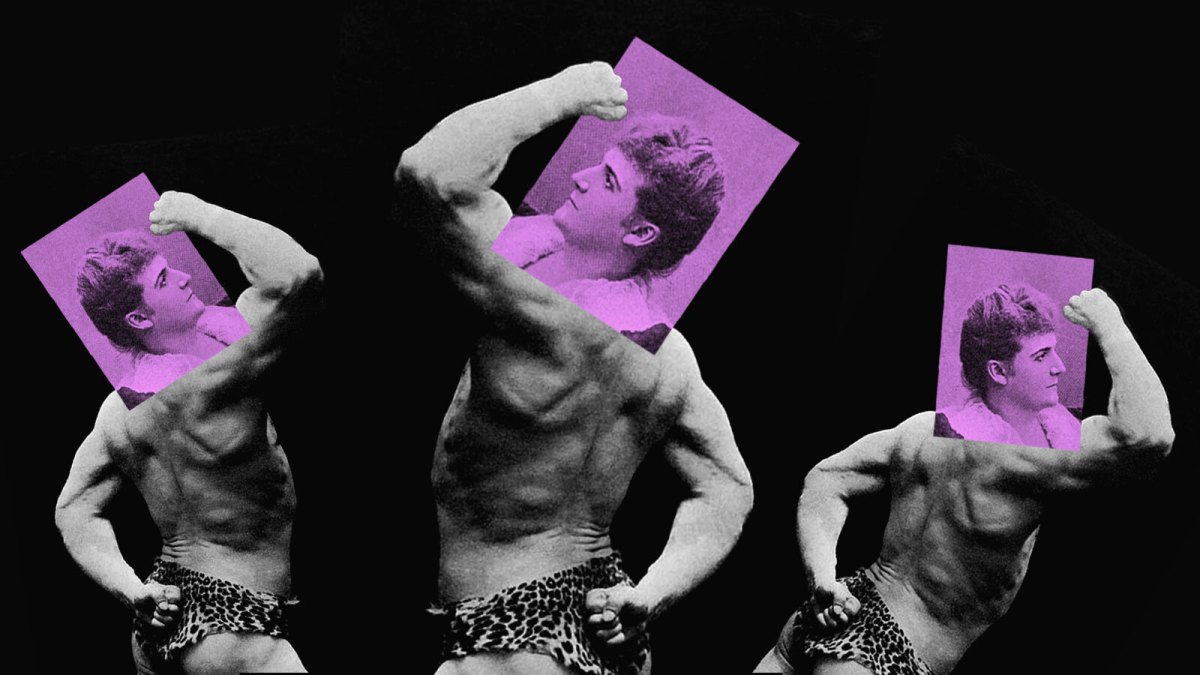
Have you ever wondered why they call it the long 19th century? From Beethoven’s hammering martellatos, to Wagner’s massive, veiny works that seem to last forever, to Liszt’s immense hand size (…), the Romantic period was in many ways a musical virility contest with many—many—climaxes. But there was one composer who critics considered the most virile of them all. We know this because almost every review of her work comments first and foremost on its virility. That composer is Augusta Holmès.
If you haven’t heard of Augusta Holmès, a French composer of Irish descent, her virility may in fact be why. As with all women composers of her era, Holmès’s music was evaluated more as a gender performance than a musical one. “The most surprising thing about her musical talent is its completely virile quality,” the poet Auguste Villiers de L’Isle-Adam enthused. “Her music has a vigor, a virility, an enthusiasm, which deserve better than the banal praise usually bestowed on female composers,” added La Liberté. By 1900, however, Holmès’s fame, sexual freedom, and toned brass chorales began to work against her. “This music gives me the impression of being transvestite,” a Le Courrier Musical critic wrote that year. “Oh, Ladies, be mothers, be lovers, be virgins…but don’t try to be men. You will not succeed in replacing us, not entirely.” After her death, her music was rarely heard again.
But it was too late. The throbbingly virile works of Augusta Holmès had already proved that virility, like artistic merit, has no gender. “I have the soul of a man in the body of a woman,” Holmès once declared. Born in Versailles in 1847, the composer was raised in the company of her Irish military father’s mounted weapons, as if to prepare her for the battle of being a woman composer in Third Republic France. Primarily self-taught (women were barred from the Paris Conservatory), she was anointed by the infamously virile Wagner and Liszt, and lusted after by the less-virile-but-trying Saint-Saëns, Gounod, Massenet, Franck, D’Indy, and more. A composer of art songs as much as large-scale works, I don’t even need to tell you that she wrote her own texts.
Holmès’s virile lifestyle, as much as her works, put Ernest Hemingway’s to shame. Between having four to five children in an affair (the numbers are hazy because she lived alone in her own Parisian bachelor pad), joining the ambulance corps during the Franco-Prussian War, and posing nude for oil paintings, she also composed. Late in life, she studied with César Franck, who wrote his near-pornographic Piano Quintet for her, to the chagrin of his wife. A dual-national nationalist who spoke five languages, Holmès composed jingoist banger after banger for France, Ireland, Poland, and Italy. As Saint-Saëns put it: “She was powerful—maybe too powerful.”
What was the most virile composer’s most virile work? There is no single metric for virility in classical music, but I have attempted to create this ranking through an intensive process involving cold showers, Schenkerian analysis, and CrossFit. Musical factors included how extended is the duration, how pounding is the fortissimo, how forward-thrusting is the tempo, how imposing is the number of players onstage, how intellectually unfathomable is the form, how fawning is the reception, and how long is the hair. Try these Romantic works on for size and see if you, too, aren’t surging with potent ideas, dominating your rivals, and generally inseminating the world with your presence.

Unlimited access to our
