

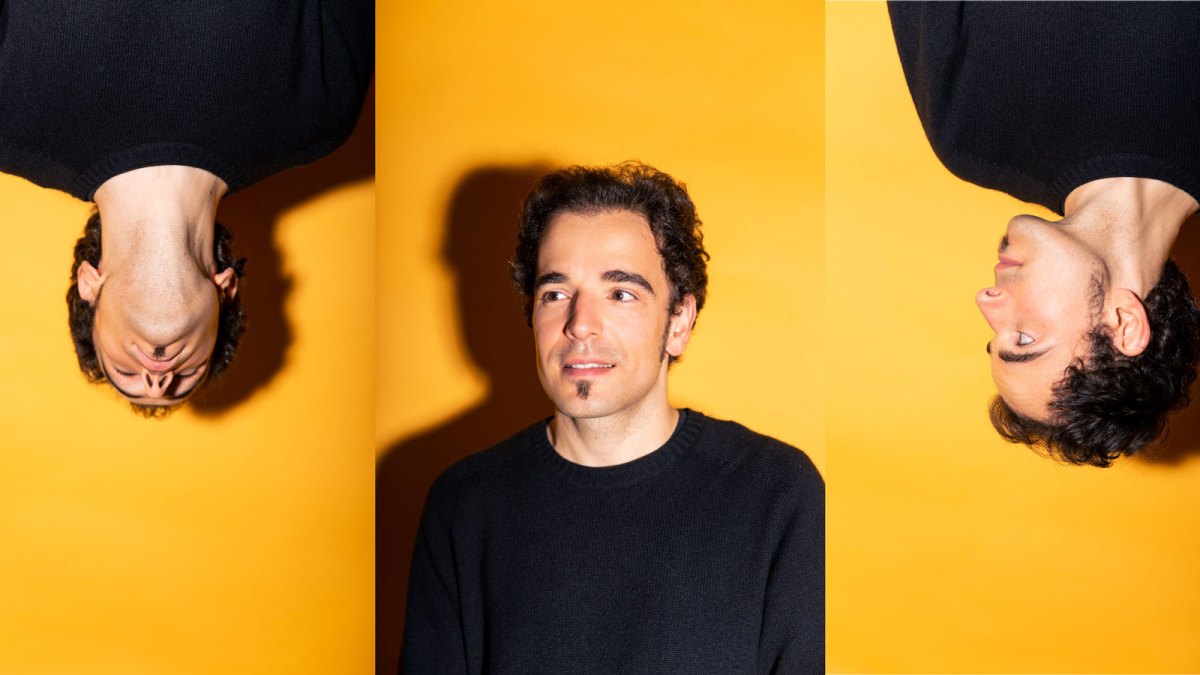
In the composer Utku Asuroglu’s pieces, colors joust like a child battling with their plastic toys: passages of extreme, artificial, neon intensity sit alongside moments of sensitive beauty, moving from Starburst-candy orange to oceanic blues and grays. Lo-fi electronic glissandi and kazoos unravel into bare tendrils of melody. Many of his works traverse great textural distances in short times, evoking a very contemporary feeling of fragmentation to which much new music aspires, but less commonly achieves in such a lasting way.
Asuroglu was born in 1986 in Istanbul, and studied composition in Rotterdam, Graz, Freiburg, Stanford, and at IRCAM in Paris. He is coming off several highly successful weeks: In April, he received a Guggenheim fellowship, and in May joined the faculty at the University of Missouri. He’s also developing an opera called “Zeki,” about the Turkish singer Zeki Müren. I spoke with Asuroglu via Zoom about his improvements to Chopin, filtering his teachers’ advice, and shaking the world awake through music.
Unlimited access to our
