

On Monday, Pope Leo XIV presented his first encyclical, “Magnifica Humanitas.” It sets out his vision for how we can best harness artificial intelligence without stripping away human dignity. Warning against “the construction of yet another Tower of Babel” and the dangers of standardization and the concentration of power, he insists technology cannot be human. […]
Category: Essay
Posted inEssay
Perceptual Astronomy
Fifty years ago, the American composer Maryanne Amacher set about the creation of a major new work: not a symphony or a string quartet, but a TV series. Originally titled “Sound Saga,” the piece, even at this early stage, was already remarkably—perhaps unprecedentedly—elaborate. The plot was based on Arthur C. Clarke’s baroque far-future space opera […]
Posted inEssay
Inside the Sound of the Swarm
“The granular dimension of time is the secret to bug music. I don’t just mean the music bugs make, but something wider and deeper, the ‘bug music’ aspect of life, or the bug and the glitch hiding inside all music.”—David Rothenberg The peripatetic, protosurrealist writer and translator Lafcadio Hearn had a severe case of myopia. […]

Posted inEssay
Incoherence and Indignity in the Classic FM Hall of Fame
“The radio announcer for Classic FM informs his audience that Vaughan Williams’ ‘The Lark Ascending’ has landed, by popular vote, the number one spot in the station’s classical ‘Hall of Fame.’ The background is established: that Vaughan Williams is widely understood – sometimes loved, sometimes loathed for it – as the greatest representative, even as […]
Posted inEssay
Mozart as Snake Oil
It was the year 2009, and the Walt Disney Company was refunding DVDs because they did not make customers’ children geniuses. Throughout the late 1990s and early 2000s, Baby Einstein LLC’s educational videos were a juggernaut of American child-rearing. The company’s VHS tapes and DVDs like “Baby Bach” and “Baby Mozart” consisted of soothing videos […]
Posted inEssay
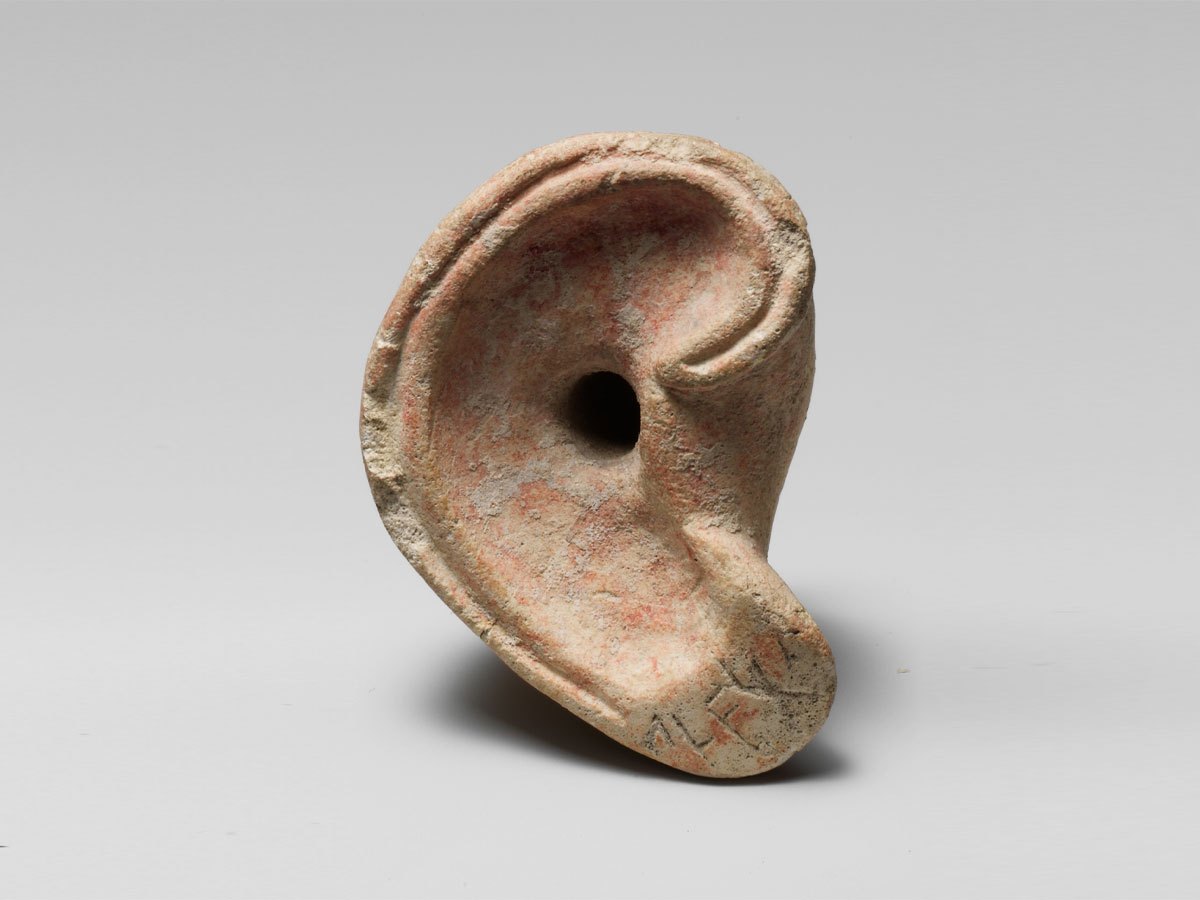
What Remains Behind
It started with a feeling, not in the ear, but in the gut. Music had always been an intensely corporeal experience for me. When I listened, and especially when I played, the sound only seemed to start in my ears before making my whole body vibrate in sympathy. It felt as though there were reverberant […]
Posted inEssay
A Matter of Perspective
Recently, the world of classical music was rocked by the spectacular discovery of new works by two major composers. In 2024, scholars discovered a Serenade in C, soon nicknamed “A Very Little Night Music,” by Mozart. The little composition, written when he was about 12 years old, was found in a library in Leipzig: About […]

Posted inEssay
The Art of the Ideal
Can music change the world? That it can and does functions as a truism across many spheres of U.S. culture. Attali canonically argued that music, an element of what Marxists call the “superstructure,” can actually influence or foreshadow world-historical changes in the “base” of economic relations and production. The belief that music can change the […]

Posted inEssay
A View from Emptiness
I. It opens mid-motion, as if caught unraveling. A noise, brisk and grained, emerges from the second violin, bow hairs pressed against string. Col legno: The cello draws the wooden back of the bow upward and then down—a rustle makes itself heard and is gone. Now the second violin traces light, oblique arcs, upward, then […]

Posted inEssay
Bartók and Janáček At the End of Liberal Society
When the Austro-Hungarian Empire was collapsing, but a new order remained uncertain, two extraordinary musical works grappled with questions now central to our understanding of the 20th-century political catastrophe. Bartók’s “The Wooden Prince” (1914–16) and Janáček’s “Taras Bulba” (1915–18) help us understand the cultural and ideological forces that prepared the ground for totalitarianism and the end of liberal society […]