


In 2020, violist Wilfred Farquharson was preparing to move to California for The Los Angeles Orchestra Fellowship, a three-year fellowship “for musicians from underrepresented communities” co-organized by the Los Angeles Chamber Orchestra (LACO), Inner City Youth Orchestra of Los Angeles (ICYOLA), and the University of Southern California. Then, a former participant called him out of […]
Tag: Music & Equity

Posted inProfile
Uncommitting to Change
Some five years ago now, social media feeds went dark. In the bewildering first summer of the COVID-19 pandemic, timelines filled with black squares to show solidarity with the global protests against racist police brutality. Such square-posters included the expected activists and signal boosters, but they also included major institutions of classical music like the […]

Posted inInterview
Unnatural Invisibility
Some composers are celebrated in their lifetimes. Others must wait for history to catch up. A composer faces a plethora of challenges throughout their career, from testing an edgy yet dubious idea or missing a crucial post-concert networking opportunity to simply submitting compositions on time. The odds of slipping into obscurity are extremely high. Add […]
Posted inReport
Multisensory Perceptions
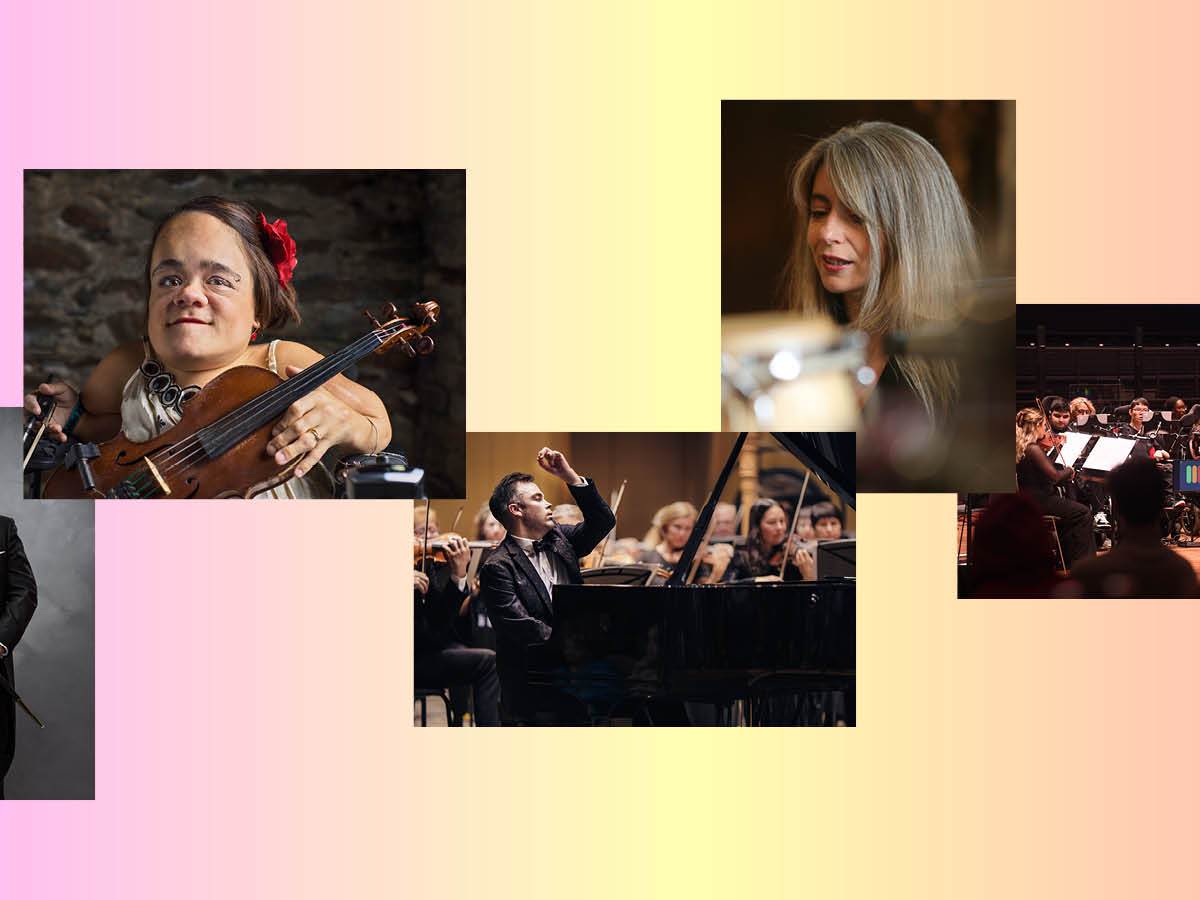
The traditional standards of ability and expression in classical music have often overlooked diverse perspectives. Such practices have helped create systemic inequalities that are still profoundly entrenched; recent findings from the Musicians’ Census reveal that 71% of disabled musicians have faced or witnessed discrimination, with 19% reporting it as a significant barrier to career progression. Such […]

Posted inEssay
The Post-Election Hand of Fellowship
In the weeks before the 2024 U.S. election, when my Trump anxiety kept me from sleeping or focusing, the only thing I found solace in was an academic book of musicology. If I had encountered Samantha Ege’s South Side Impresarios: How Race Women Transformed Chicago’s Classical Music Scene at any other time, I would have […]

Posted inInterview
Culture of Discrimination
In recent years, the classical music world has been increasingly confronted with its own exclusionary practices. Dr. Maiko Kawabata, an award-winning musicologist, violinist and professor at the Royal College of Music and the Open University, examined some of those challenges in her article “The New ‘Yellow Peril’ in ‘Western’ European Symphony Orchestras.” Kawabata’s extensive research and […]

Posted inInterview
The Reverse Conductor
In 2022, I sang Benjamin Britten’s “War Requiem” at the Royal Albert Hall. During the performance a spotlit figure caught my eye, moving his hands dynamically and expressively with the musical flow, but who was neither a conductor, nor a singer, nor an instrumentalist. That figure was Paul Whittaker: a Deaf musician who uses British […]

Posted inEssay
Composers, Canonized
I get itchy in temples and I make jokes at funerals. You could reasonably describe me as “irreverent.” But I have felt the divine. I was in college, and it was a Wednesday, and I was stuck in choir rehearsal. And we had a moment, together, in the middle of John Rutter’s “Requiem.” My voice […]

Posted inInterview
Where the Trees Are
Whether it’s Julius Eastman’s “Prelude to the Holy Presence of Joan of Arc,” Beethoven’s “Missa Solemnis,” or Anthony Davis’s “X: The Life and Times of Malcolm X,” listening to Davóne Tines sing is like watching rock climber Alexander Honnold free solo up El Capitan: You’re struck by the raw power and voltage of his stentorian […]

Posted inReport
Relaxing in the Pressure Cooker
On YouTube, there’s a video of a 1973 concert with the Royal Concertgebouw Orchestra and Bernard Haitink performing Beethoven’s Third Piano Concerto with soloist Artur Rubinstein. It’s an extraordinary concert to hear, between the young Haitink, the 86-year-old Rubinstein, and the orchestra’s signature sound (consistently described as “homogeneous and transparent at the same time”). The […]